

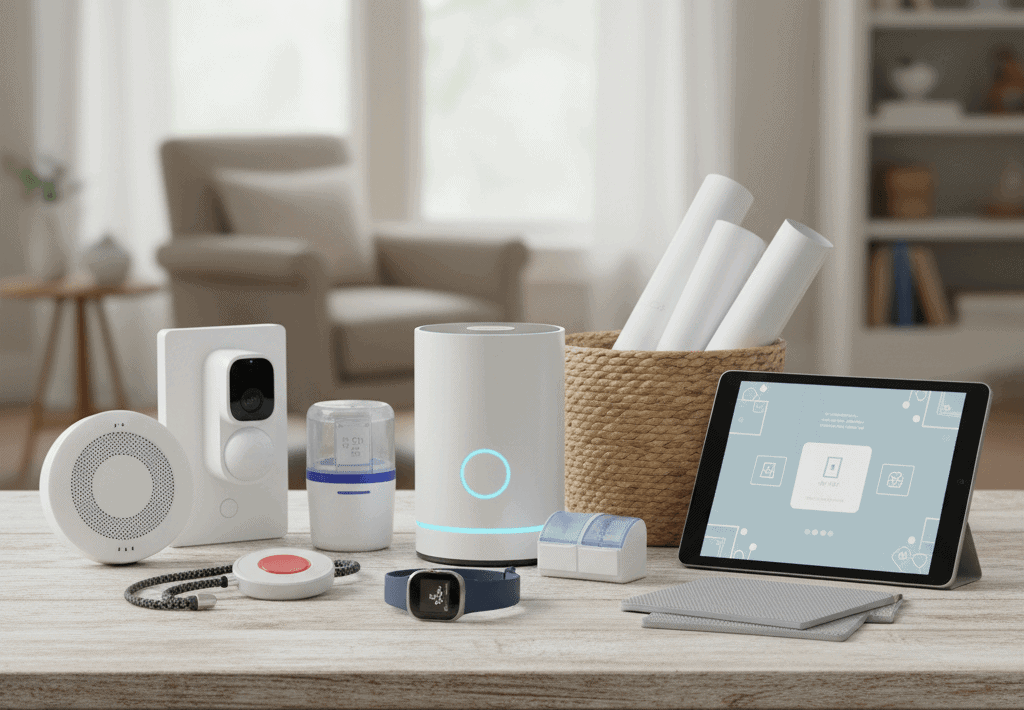
Choosing technology to keep a senior loved one safe at home is about matching simple tools with real needs. For many families the goal is to reduce risk while keeping independence. The right collection of devices and routines can cut response times, prevent common accidents, and make daily life easier without turning the house into a clinical setting.
This article walks through an essential toolkit for senior home safety tech with down to earth tips and examples. You will find practical advice on what to buy first how to set things up and how to keep systems working over time. Read on for checklists that help you compare options and for a short plan you can follow during your next family meeting.
Why home safety tech matters for seniors
Falls are a leading cause of injury for older adults and many happen at home. According to public health sources more than 3 million older adults visit emergency departments each year after a fall. Timely detection and clear daily routines reduce long hospital stays and help seniors remain in familiar surroundings.
A safe technology set supports three main goals prevent serious injuries check that medications are taken as prescribed and enable quick help when something goes wrong. For example a wearable device that detects a fall and calls a response center can shorten the time a person spends waiting for help. Similarly a timed pill dispenser removes guesswork when multiple medications are involved.
Core tools in your toolkit for senior home safety tech
Not every device fits every situation. The ideas below form a practical baseline for many households. Think of them as options to combine rather than a single product checklist.
- Personal emergency response systems These systems connect a user to a live operator or caregiver with the press of a button. Look for units with long battery life and clear two way audio.
- Wearable fall detection Wearables that sense sudden movement and impact can call for help automatically. Check how false alarms are handled and whether the device works both inside and outside the home.
- Medication management Timed pill dispensers and reminder systems cut missed doses. Some units lock until the correct time and log openings for family members to review.
- Door and motion sensors Simple sensors can alert a caregiver when a door is opened or if a room receives no activity during an expected period. These are useful when wandering or overnight monitoring is a concern.
- Connected smoke and carbon monoxide detectors Standard detectors are life saving. Connected versions can send alerts to caregivers when the resident is not at home or unable to act.
- Voice enabled or touch free controls Voice control can make lights and thermostats easier to manage without stretching or climbing. Use devices that allow clear permission settings for privacy.
How to select devices for mobility and fall detection
Choosing the right mobility and fall detection options requires thinking about lifestyle and daily movement patterns. A device that works well in a clinic may be uncomfortable during home activities. Test options in realistic situations before committing.
What to test before buying
Try these checks when evaluating a product in store or via a trial period
- Comfort wear time Does the wearable feel too heavy when worn all day
- False alarm rate Simulate everyday motions such as sitting on a couch and bending to pick something up
- Range and connectivity Confirm the device can reach its base station or cellular signal in all rooms
- Battery life and charging frequency Longer intervals between charges fit better with independent routines
Placement tips that matter
Where sensors and chargers sit affects reliability. Place fall detection chargers near a frequently used chair and keep base stations in central spaces to limit signal loss. For motion sensors select heights and angles that capture usual walking paths without constant false triggers from pets.
Medication and daily reminders that work
Medication errors increase with the number of daily pills and with cognitive decline. Systems that combine reminders with managed dispensing reduce risk and give family members visibility.
Start with a simple alarm based approach and add mechanical dispensers when routines demand more control. For example a weekly pill box with color coded compartments and a mobile reminder can be a good first step. If missed doses remain a problem consider a dispenser that unlocks only at scheduled times and that reports openings to a caregiver app.
- Low cost option Simple timers paired with labeled pill boxes
- Mid level option Battery powered dispensers that beep and flash until retrieved
- Full featured option Networked dispensers that log activity and can alert caregivers
Monitoring options and privacy considerations
Video cameras sound useful but they raise legitimate privacy concerns. Video is powerful for remote checks however many families prefer less intrusive choices like motion sensors or door alerts. When you do choose video pick devices with granular privacy settings and local storage options.
Another alternative is non visual monitoring. Pressure mats, bed occupancy sensors, and ambient sound detectors can signal unusual patterns without constant visual surveillance. These lower privacy impact while still providing actionable alerts.
Consent and settings
Discuss monitoring openly with the senior involved and make adjustments together. Set alert thresholds to limit nuisance notifications and choose who receives high priority messages. Make sure access credentials are unique and update them periodically for security.
Installation maintenance and ongoing checks
A technology solution only helps when it works. Set a maintenance routine and assign clear roles for checks and updates. A weekly battery check and a monthly software update review are simple practices that prevent most failures.
- Label chargers and spare batteries and keep them in a visible spot
- Test call procedures quarterly to confirm contact numbers and response steps
- Keep a paper backup of critical information such as medication lists and emergency contacts in case internet service is down
When possible choose devices with local fallbacks for power outages such as cellular based alert options. If the home has limited connectivity consider devices that operate on cellular plans rather than solely on home Wi Fi.
Building an integrated plan and where to start
Think of safety tech as one part of a household plan that includes medication oversight physical therapy and environmental changes. Start by identifying the highest risk times and locations for the senior in question. For many households mornings and late evenings are peak moments for falls and missed doses.
Start small with one or two high impact items such as a personal emergency response system and a timed pill dispenser. Once those are in place add monitoring sensors or a wearable if gaps remain. Many families find this stepwise approach easier to manage financially and less overwhelming for the senior.
If you would like a structured checklist and detailed buying points consider reading this article on choosing senior safety tech for a clear set of comparison questions and vendor suggestions. Use that information along with the practical checks presented here to compare products side by side.
Cost trade offs and funding options
Price varies widely across products and services. Basic alert buttons can be inexpensive while monitored services with monthly fees cost more over time. Weigh one time purchase costs against ongoing subscription fees and consider what level of monitoring is needed.
Check eligibility for local programs that provide equipment or cost sharing for older adults. Some community health services and insurers offer partial reimbursement for devices that reduce hospital admissions. Combining a modest initial purchase with available aid can stretch a family budget while keeping safety high.
Choosing the right set of devices and routines takes a few simple steps. First identify the highest risks at home then pick one or two proven items to address those risks and test them in daily life. Keep privacy and comfort in mind and set a schedule for routine checks. With small investments and clear roles for family members you can make the home safer while respecting independence.
Ready to take action Start by making a short inventory of the senior daily patterns and the rooms where most activity happens. Prioritize a wearable or emergency button if falls are a main concern and add a medication management system if missed doses are frequent. Use trial periods and return options to confirm fit and comfort. If you want a simple side by side comparison and more purchasing tips use the linked resource above then pick the next small step. A clearer plan now can prevent a crisis later and will give everyone a better sense of control and safety.